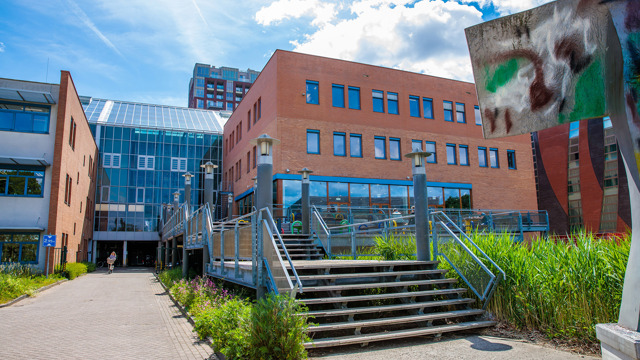
Are you ready to become a changemaker in the global food system? This transformative module will immerse you in the world of sustainable food systems innovation, equipping you with the necessary tools, knowledge, and leadership skills to drive meaningful change.

Short
The minor Future Food Systems empowers students to become changemakers in the agri-food sector, connecting their personal values with meaningful action. By exploring complex food systems and sustainability transitions, students gain the insights and tools needed to understand how the food sector can evolve towards a more resilient and responsible future. The minor Future Food Systems encourages students to develop creative ideas that support sustainable transformation and identify new business opportunities by combining systems thinking, innovation, and value-based leadership. This minor is your gateway to shaping the future of food and making a real impact on the world!
About the programme
You will explore
System Transitions & Future Scenarios
Understand how food systems evolve and learn how to guide transitions towards sustainability by engaging with stakeholders such as governments, businesses, academia, and civil society.
Economic Innovation for Sustainability
Discover practical tools such as True Cost Accounting and sustainability reporting frameworks.
These tools can be used to evaluate impact and redesign agri-food systems into more circular and resilient models.
Research for Impact
Conduct independent research on a topic that inspires you and contribute to innovation in sustainable food production and consumption.
Value-Based Leadership Development
Strengthen your leadership abilities by connecting your personal values with your professional actions to empower you to inspire change in the agri-food sector.
Learning goals
This module contributes to the following learning goals:
- Analyse food systems from a transition perspective.
- Contribute to the redesign of sustainable future food systems.
- Contributing to innovation in sustainable agri-food production and consumption in a global context.
- Identify opportunities in agri-food markets and international supply chains, contributing to new business development.
- Promote the implementation of transitions in the global agri-food sector.
- Evaluate personal talents and competencies, reflect on ethical issues, and develop personal leadership.
- Organise and execute projects, collaborating effectively with teams and external clients.
- Design and carry out applied research.
Admission requirements
Dutch Bachelor students
- A propaedeutic diploma.
- At least 52 ECTS from year 2 and 30 ECTS from year 3 (preferably by an internship).
These credits must be obtained within a related Bachelor’s programme in:
- agriculture,
- agribusiness,
- food production or
- environmental studies
International students
A minimum of 3 years of bachelor’s-level higher education, with at least 75% of the programme completed.
Completion of at least 1 major practical assignment or traineeship.
These completed credits must form part of a programme related to:
- agriculture,
- agribusiness,
- food production or
- environmental studies
Final admission is subject to approval by the module team.
Practical information
Schedual
The Future Food Systems (FFS) module combines interactive learning with hands-on experiences.
- You will have 2 days of on-campus activities each week (for example Monday and Friday), including lectures, workshops, and tutor sessions.
- The remaining days are dedicated to individual study, project work, and research.
On selected days, you will also participate in company visits and excursions, giving you the opportunity to explore real-world examples of sustainable practices and connect with professionals in the agri-food sector.
This balanced approach supports learning, collaboration, and practical experience.
Assessment
Assessment in this module is based on several components that reflect both your individual learning and project work. You will be evaluated through a reflection report (15%), a research report (35%), and a project report (50%).
Active participation in classes, excursions, and activities is also expected throughout the module.
Final grades are awarded on the Dutch grading scale from 1 to 10.
Required literature
- Course Manual, 2026 Steeg, van de J. (digital copy made available)
- Strengths Finder 2.0 Rath, T.
- The 7 Habits of Highly Effective People Covey (2013, or later)
Excursion & activity fees
You should budget for excursion and activity fees of around €50.
How to apply as an exchange student
If you want to apply for this programme please click here for information on the procedure.
Questions?